
Are human rights real?
For the Jews, they have become a very bitter joke.

My new book, Self Defense: A Jewish Manifesto, is now available at Amazon via Wicked Son Books and the Z3 Project.
Today, human rights are a religion. A religion for the irreligious, perhaps, but a religion all the same.
Generally speaking, the creed of human rights is a deracinated form of universalist Protestant Christianity, slightly modified by ideas created by secular Enlightenment intellectuals. There is nothing particularly rational about them. They are a catechism, articles of faith, and are invoked much as prayer and admonition are invoked by the great monotheistic faiths. They are means by which a kind of divine judgement is proclaimed. They define the original sins of people and nations, call them to a reckoning, conduct the auto-da-fe, and finally pronounce sentence.
None of this is necessarily a bad thing, as nothing is inherently discredited simply because it is a religion, nor any creed because it is an article of faith. Everyone believes in things that have no concrete reality, and almost all legal precepts are based entirely upon consensus.
Money, for example, has value because we all agree that it has value. We consent to the idea that mere paper or metal constitutes a sign and a substitute for what does have value, and therefore we exchange it accordingly.
Without consensus, however, money is nothing, and sometimes the consensus collapses. The financial industry, for example, trades in money itself while producing little of a concrete nature. In such a situation, one begins to wonder if the construct may have been taken a bit too far, because men have begun to play with illusions, as when financial crazes and panics take hold, the psychology of consensus is deranged, and disastrous results ensue.
Nonetheless, even these derangements, in their real-world effects, indicate that money is, in some way, “real.” It is only when the institutions that create and distribute money cease to exist that the consensus breaks down completely and money itself ceases to exist, and societies return to such things as the barter economy. The fall of the Roman Empire is, perhaps, the most catastrophic example of this.
It must be admitted, then, that it is quite possible for things like human rights to cease to exist. When people cease to believe in them, corrupt them, exploit them, or simply jettison them for craven reasons, the consensus that sustains them collapses, and we must face a world without them.
For Jews and Israelis, this is a decidedly pressing issue, because we see all around us the collapse of the consensus around human rights.
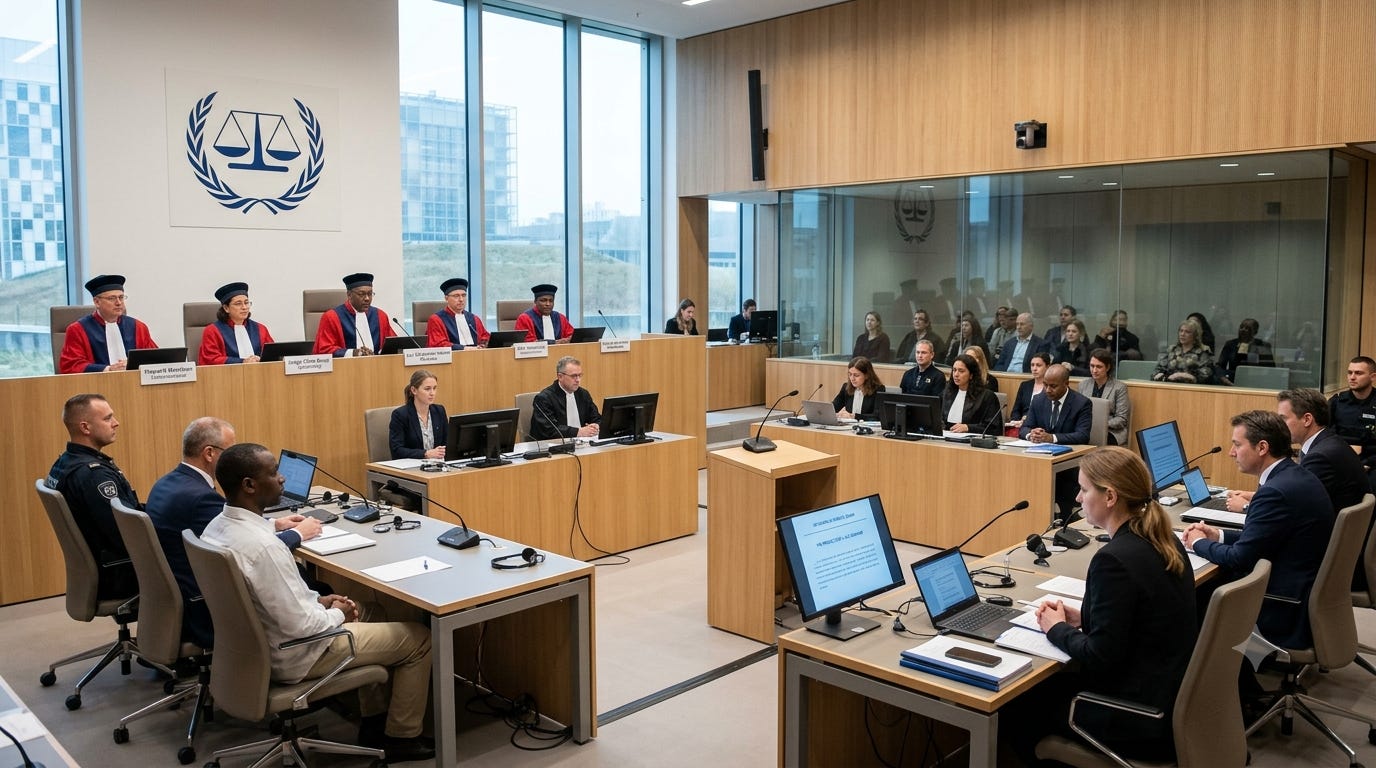
To Israelis, the evidence is mountainous and irrefutable: Regarding Israel, human rights have become nothing but a weapon. The international organizations, NGOs, activist groups, politicians, and legal authorities supposedly based on and sustained by human rights and charged with enforcing them have turned them into a mere bludgeon to be wielded against the Jewish state.
All these groups, with their lies, distortions, and blood libels, have thoroughly corrupted their catechism and creed. They call Israel to the dock with no evidence, manufacture pretexts and criminal charges, and exploit the language of human rights as an instrument of war on behalf of Israel’s genocidal enemies. The construct of human rights and the consensus around it have been undermined and, perhaps, demolished by the very people charged with upholding both with the honor and impartiality necessary to sustain them.
For Diaspora Jews, the collapse is more subtle and often silent, but nonetheless equally real. In the United States, for example, some of the Jews’ most essential human rights have been abridged and abrogated. After all, if you cannot go to a synagogue without a shrieking mob outside, without living in fear for life and limb, you do not have freedom of religion or assembly. If you cannot defend yourself and your people on a college campus or in a social group without the threat of verbal and physical attack, you do not have freedom of speech. Thus far, against these violations, the Jews have had little recourse, and as American antisemitism further seizes the commanding heights of the republic’s academic, political, and legal institutions, they will have even less.
It is clear that, regarding the Jews in general, what we are seeing is, quite simply, the suicide of human rights. Indeed, if human rights are not accorded to the Jews, if they are not applied universally and impartially, they have become nothing more than arbitrary tools in a political, social, cultural, and military campaign whose ultimate logic is cultural and finally physical genocide.
Given this, we must ask: do human rights exist at all?
After all, if human rights are not real in the minds of their partisans and enforcers, they cannot be real in actual practice. Those who are the partisans of those rights, indeed those who created them, do not accept them, and the proof is that they employ them as a weapon and a farce, a useful piece of ordnance against those they hate.
Human rights exist by consensus, but there is, in fact, no such consensus, despite the infinite, shrieking protestations of its adherents. Indeed, these often self-appointed guardians of human rights consciously refuse to recognize and enforce those rights on behalf of one of the world’s most beleaguered peoples. Therefore, they do not believe in those rights in any genuine way. They are not real to them. Why, then, should they be real to us?
It may be that human rights were once real but are no longer. Or perhaps they never existed at all. Perhaps they were mere wishful thinking. Born of revolution and the aftermath of a terrible war, they were little more than a desperate attempt to salvage humanity, and they went badly wrong almost immediately.
Indeed, human rights may always have been mere rhetoric, an institutionalized denial of the inherent injustice of the world. Perhaps they were nothing more than shibboleths adopted by those too weak or too craven to face the horrors of life and the necessity of facing them head-on rather than through vague protestations of the inherent dignity of man.
It is difficult to know whether any of this is the case. What we do know, however, is both an acknowledgement and a condemnation: for Jews today, human rights are, at best, a very bitter joke. For the moment, unfortunately, they are likely to remain so.
Righteous and unsentimental as always, which is why you represent one of the most important Jewish creators on this platform committed to defeating antisemitism and antizionism. Reactive outrage is unhelpful. Cogent analysis and moral clarity, along with the courage to act, is how we win.